
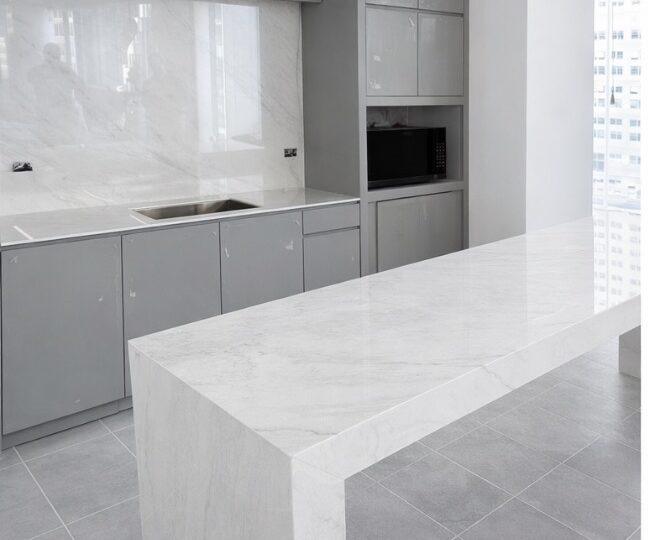
Homeowners constantly search for the perfect surface to finish their dream kitchen. You want a material that looks incredible but can also handle the daily abuse of cooking, cleaning, and entertaining. The market offers granite, marble, and quartz, yet a new contender has captured serious attention in recent years. This material is porcelain, and it is quickly becoming a favorite for residential and commercial projects alike.
You might associate porcelain with delicate figurines or bathroom tiles, but modern engineering has changed that perception entirely. Today, large-format slabs offer a robust alternative to traditional stone. Companies like Old Stone Tile and Marble Works have seen a surge in demand for these surfaces, which promise exceptional durability and a sleek aesthetic that fits modern homes.
But does this material truly live up to the hype surrounding it? We will examine the composition, performance, and practical pros and cons of installing a porcelain countertop in your home, with insights into why experienced fabricators like Old Stone Tile and Marble Works are championing this innovation.
The Composition of Porcelain Slabs
To understand why this material performs so well, you must look at how it is made. Manufacturers use a precise blend of natural raw materials to create these surfaces. The primary ingredients include china clay, also known as kaolinite, and powdered china stone.
The modern fabrication process takes these ancient principles and applies extreme industrial power. The mixture of white China clay, feldspar, and other minerals is pressed under immense weight. It is then fired in a kiln at extremely high temperatures, often exceeding 2,200 degrees Fahrenheit. This process, known as sintering, fuses the particles together permanently.
The result is a dense, non-porous material that is incredibly hard. Unlike the fragile white China tea sets of the past, the porcelain slabs on Long Island sourced by Old Stone Tile and Marble Works are engineered for structural integrity. They behave more like a sheet of man-made stone than a piece of pottery.
Unmatched Durability and Performance
Performance is usually the main concern for anyone investing in a new kitchen. You need a surface that tolerates spills, sharp knives, and hot pans without failing. A porcelain countertop excels in almost every category of durability testing.
Heat Tolerance
One of the biggest advantages of this material is its extreme heat resistance. Because the slabs are fired at such high temperatures during manufacturing, they remain unaffected by typical kitchen heat. You can place hot pots directly from the stove onto the surface without worry.
Scratch and Impact Resistance
The surface hardness of porcelain is highly resistant to scratching, meaning you can cut vegetables directly on the surface in a pinch. However, experts at Old Stone Tile and Marble Works still recommend using a cutting board to protect your knives from dulling.
While the material is highly durable, it is rigid. A heavy impact from a cast-iron skillet on the edge could chip the material. This is why professional fabrication is key to creating edge profiles that minimize risk.
Stain and Moisture Resistance
Porcelain is virtually impervious to water. The water absorption rate is incredibly low, often less than 0.5 percent. This makes the material hygienic and stain-resistant without the need for chemical sealers. Unlike the natural stones that Old Stone Tile and Marble Works restores and seals for clients, porcelain is maintenance-free from the start.
Pro Tip: While porcelain is scratch-resistant, avoid using ceramic knives directly on the surface. Two ceramic materials rubbing together can actually cause scratches that metal knives would not.
Design Versatility and Aesthetics
You can find slabs that mimic Calacatta marble, industrial concrete, rusted metal, or even wood grain. The patterns are crisp and realistic. Because it is a manufactured product, Old Stone Tile and Marble Works can provide a wide range of consistent colors and patterns to match any cabinetry.
Edge Profiles and Thickness
Designers also love the flexibility of the edge profile options. Because the material is strong, it can be manufactured in thinner profiles than natural stone. However, skilled fabricators can also create the illusion of a thick, substantial block using mitered edges.
A mitered edge involves cutting the slab at a 45-degree angle and joining it with a skirt piece. This technique makes a 12mm slab look like a three-inch thick block of stone. This is a specialized service that the craftsmen at Old Stone Tile and Marble Works excel at, creating seamless designs that elevate the look of any kitchen.
Installation: The Critical Factor
If there is a downside to this material, it lies in the installation process. Professional installation is absolutely mandatory for porcelain countertops. The material is extremely hard, but it can be brittle during the fabrication and transport stages.
Fabricators need specialized tools and diamond blades to cut the slabs without chipping them. Powdered china and clay create a dense body that resists cutting more than granite does. Finding a fabricator who is experienced specifically with porcelain slab countertops, like the team at Old Stone Tile and Marble Works, is vital for a successful project.
The cost of labor can be higher compared to other countertop materials because of this difficulty. While the material cost per square foot might be competitive, the fabrication costs can drive the total price up. You should always get detailed quotes from reputable providers like Old Stone Tile and Marble Works to guarantee accuracy.
Warning: Never attempt to install porcelain slabs as a DIY project. The risk of cracking a large slab during transport or cutting is high, and mistakes are generally irreversible.
Outdoor Kitchen Suitability
One area where porcelain countertops dominate the competition is in outdoor applications. If you are planning an outdoor kitchen, Old Stone Tile and Marble Works highly recommends this option. Porcelain is completely UV stable, and will not turn yellow and degrade under UV light,
Prolonged exposure to direct sunlight will not fade the colors or weaken the structural integrity of the slab. Its high performance in freezing and hot weather makes it ideal for uncovered patio areas. The zero water absorption also means it won’t crack from freeze-thaw cycles in colder climates.
Are Porcelain Slabs Right for You?
Choosing a countertop material is a balance of budget, aesthetics, and functionality. Porcelain countertops offer a compelling package for homeowners. They are scratch-resistant, heat-proof, and incredibly hygienic.
Finding a certified installer is the most important step in the process. With the skilled fabrication services available at Old Stone Tile and Marble Works, the result is a stunning surface that will outlast almost any other material in your home. Trust us for expert countertop installation on Long Island.
Whether you are building an outdoor kitchen or renovating your main cooking space, porcelain is a top-tier contender. For the best results, consult with the professionals at Old Stone Tile and Marble Works to explore their inventory and installation options.