
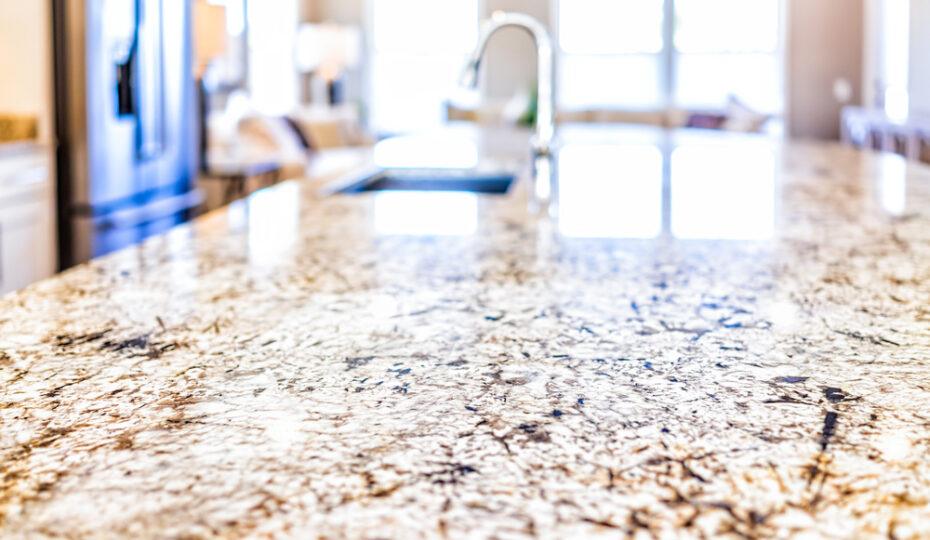
Granite countertops represent a substantial financial investment that adds significant value and incredible long-lasting durability to your residential property. However, the longevity of this stone is deeply dependent on the care it receives. Many homeowners unknowingly damage their expensive stone surfaces by applying the wrong household cleaning products over long periods.
If you are wondering what you should use to clean granite countertops, it is essential to look beyond the average grocery store shelf. As an experienced granite supplier on Long Island, NY, we have spent years mastering the nuances of igneous and metamorphic rocks, helping clients preserve the factory-fresh luster of their installations. To truly care for your surfaces, we must examine the best way to clean granite using specific chemical compounds and natural solutions that respect the stone’s unique geology.
The Science of Stone: Why Professional Expertise Matters
Effective natural stone care begins with understanding that granite is a naturally porous igneous rock formed from slowly cooling magma deep within the earth’s crust. This inherently porous structure means the stone readily absorbs liquids if it lacks a robust and high-quality protective sealant layer. During the fabrication and installation process, Old Stone Tile and Marble Works Corporation emphasizes the importance of a penetrating sealer. This treatment fills microscopic voids and blocks damaging moisture absorption to maintain the stone’s structural integrity.
Using harsh chemical cleaners breaks down this protective barrier rapidly, leaving the raw stone exposed to permanent structural damage. Acidic substances, even those labeled as “natural”, react chemically with the minerals inside the granite. This reaction causes dull white marks commonly known as etching. To prevent this, you must carefully select a pH-neutral cleaner to protect both the surface sealant and the beautiful stone underneath from chemical degradation.
The complex mineral composition of granite includes quartz, feldspar, and mica, which all react quite differently to various chemical exposures. For instance, certain abrasive cleaning powders will physically scratch the softer mica deposits while leaving the harder quartz untouched. Understanding this complex mineral makeup is part of the specialized expertise offered by Old Stone Tile and Marble Works Corporation, helping you make significantly better decisions about your daily household maintenance routines and long-term stone health.
Daily Maintenance Guide: What Should You Use to Clean Granite Countertops?
For everyday maintenance, you do not necessarily need a cabinet full of specialized chemicals. Simple dish soap and warm water provide an incredibly effective and completely safe cleaning solution.
- The Mixture: Add just a few drops of mild, non-acidic dish detergent to a clean spray bottle filled with warm water.
- The Action: This simple mixture gently lifts grease and food particles without stripping away your protective surface sealer.
- The Finish: Because it lacks harsh surfactants, it cleans without compromising the stone’s bond with its sealant.
Professional Granite Cleaner Products: Commercial pH-Neutral Solutions
If you prefer commercial products, look specifically for a dedicated granite cleaner labeled as pH-neutral and strictly safe for natural stone. These professional formulas often contain conditioning agents that help maintain the glossy finish on your beautiful countertops over many years. While they cost slightly more than basic dish soap, they offer excellent convenience for quick daily wipe-downs and consistent results.
Sanitization Tips: Using Isopropyl Alcohol
Sometimes you need to sanitize the surface after preparing raw meat or handling unwashed vegetables. A mixture of 50% rubbing alcohol and 50% water creates a perfect, stone-safe surface disinfectant. Spray this alcohol solution on the counter, let it sit for three minutes, and wipe it away. This provides peace of mind without the corrosive risks associated with bleach or ammonia.
Pro Tip: Always use a high-quality microfiber cloth instead of paper towels. Microfiber traps dirt effectively without leaving lint behind and gently buffs the stone to a brilliant shine.
Comparing Best Ways to Clean Granite: Commercial vs. DIY Solutions
Homeowners frequently debate whether store-bought granite cleaners outperform simple homemade mixtures. As experts in the field, Old Stone Tile and Marble Works Corporation recognize that both paths have merit, provided the chemistry is respected.
Commercial products offer consistent chemical formulations that guarantee a perfectly neutral pH balance every single time you spray the surface. They also frequently include optical brighteners that make the stone polish appear more vibrant under bright kitchen lighting conditions. For those who want a “set it and forget it” approach to maintenance, these are ideal.
Do-it-yourself (DIY) solutions cost significantly less and utilize basic ingredients you likely already keep in your kitchen cabinets. A simple bottle of dish soap will last for months and provides exceptional degreasing power. However, the risk with DIY is “soap film.” If you use too much soap in your mixture, you may notice a cloudy buildup over time that requires a deep professional cleaning to remove.
Professional stone fabricators generally approve of both methods, but if your stone begins to look hazy despite your best efforts, it may be time for a professional assessment. Old Stone Tile and Marble Works Corporation provides deep cleaning and re-polishing services for stones that have lost their way due to improper DIY ratios.
Step-by-Step Guide: How to Clean Granite Countertops
Establishing a consistent cleaning routine helps prevent sticky buildup and long-term staining. The process requires very little physical effort if you use the correct tools and approved liquids. Follow these sequential steps to achieve a streak-free, brilliant shine every time.
1. Clear and Prep the Surface
Remove all appliances, cutting boards, and decorative items. This allows you to reach every corner and prevents crumbs from hiding under stationary kitchen accessories.
2. Apply Your Cleaning Solution
Spray your chosen pH-neutral cleaner generously across the entire surface. Focus heavily on visibly sticky spots. Allow the liquid to sit for about thirty seconds; this dwell time allows the cleaner to loosen dried food particles effectively without the need for aggressive scrubbing.
3. Wipe Down and Buff Dry
Use a clean microfiber cloth to wipe the surface using wide, sweeping circular motions. Follow up immediately with a second, completely dry cloth to buff the stone. This “two-cloth” method is the secret to eliminating lingering moisture streaks and achieving a mirror-like finish.
Damage Prevention: Common Cleaners to Avoid
Many popular “natural” cleaning hacks cause catastrophic damage to stone surfaces. White vinegar and lemon juice rank among the most dangerous liquids you can apply to granite. Their high acidity eats through the protective sealant almost immediately and begins a process of mineral dissolution.
You must also keep bleach and ammonia far away from your expensive stone. These chemicals degrade the stone structure and cause noticeable discoloration. Even standard glass cleaners, which many people assume are safe for “shiny” surfaces, often contain ammonia that will permanently fog the reflective factory polish of your granite.
Abrasive tools pose just as much risk as chemicals. Scouring pads, steel wool, and heavy-duty scrub brushes will leave microscopic scratches across the polished finish. Once the polish is scratched, it becomes even more susceptible to staining. Always stick to soft materials like microfiber, chamois leathers, or simple cotton rags.
Mineral Removal and Tough Stains
Homes with mineral-heavy tap water often develop crusty white rings around sink faucets. These hard water deposits bond tightly to the granite and resist mild soaps. Because you cannot use acidic calcium removers, the removal process must be mechanical rather than chemical.
At Old Stone Tile and Marble Works Corporation, we suggest carefully scraping away thick mineral deposits using a plastic razor blade. Hold the blade at a shallow angle and push gently to pop the crust off the stone. This physical removal method protects the sealant while clearing the buildup. Once removed, a soft bristle brush and mild detergent can finish the job.
Tackling Stubborn Stains
If a spill penetrates the sealant, you may need a poultice. This is a thick paste designed to draw out stains via capillary action.
- For Oil Stains (Grease/Butter): Mix baking soda with water to create a paste. Apply a thick layer, cover with plastic wrap (poking a few holes), and leave for 24 hours.
- For Organic Stains (Coffee/Wine): Mix baking soda with hydrogen peroxide. The peroxide acts as a gentle bleaching agent while the baking soda pulls the moisture out.
Long-Term Protection: Maintaining Your Investment
Cleaning correctly is only half the battle. To maintain the longevity of your countertops, you must monitor the state of the sealant. Old Stone Tile and Marble Works Corporation recommends a simple “Water Test” to check your protection:
- Pour a small amount of water onto various sections of the counter.
- Wait 10 to 15 minutes.
- If the water beads up, your sealant is healthy.
- If the water soaks in and darkens the stone, it is time to reseal.
Most professionals recommend resealing light-colored granite annually, while darker, denser granites may only need it every two to three years. Preventative habits, such as using coasters and trivets, will further reduce the frequency of necessary repairs.
Conclusion
Maintaining the brilliant shine of your granite countertops in Queens, NY requires specific knowledge rather than intense physical labor. By choosing pH-neutral agents and avoiding the “kitchen cabinet chemistry” of vinegar and bleach, you protect your financial investment for decades. If you ever find your stone looking dull, etched, or stained beyond what home care can fix, the experts at Old Stone Tile and Marble Works Corporation are here to provide professional restoration, sealing, and maintenance services that bring your natural stone back to life. With the right care, your granite will remain the stunning centerpiece of your home for generations.
Ready to restore the timeless beauty of your home? Trust the experts at Old Stone Tile and Marble Works Corporation for professional restoration, deep cleaning, and precision sealing. Contact us today for a consultation and keep your natural stone looking flawless for generations!